
The Implementation Era: 7 Trends Shaping the Future of Cities

2,217 words in this newsletter - about 9 minutes and 20 seconds to read.
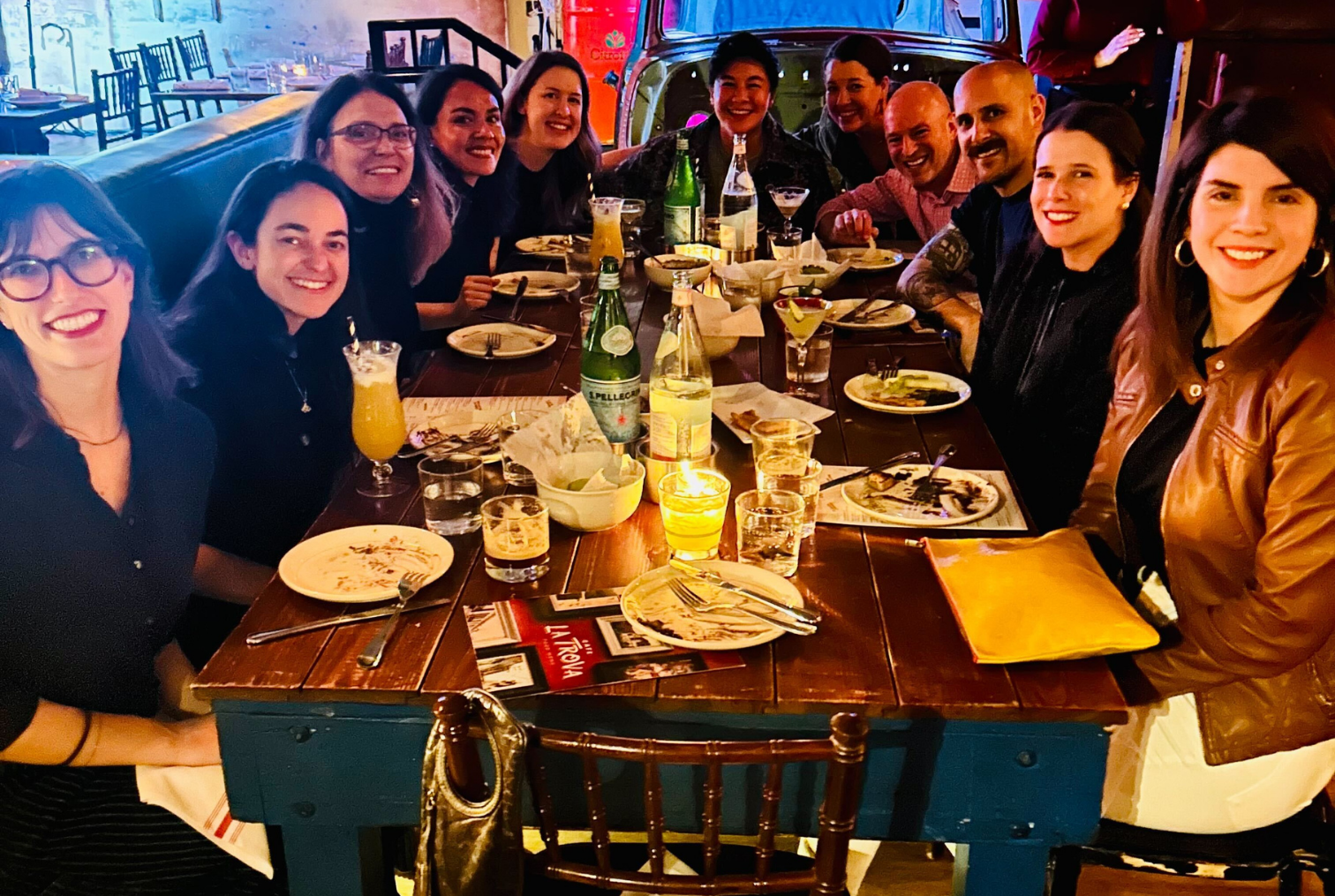
Last month, the Cityfi team gathered in Miami for a strategic retreat. In addition to watching the Super Bowl (and Bad Bunny!) together, celebrating TWO birthdays, navigating the treacherous world of Floor Is Lava, sharing many delicious meals, and enjoying the sunny weather, we also got a lot of work done. This newsletter is one result of those conversations, part of a series of discussions about how we can better serve our clients and refine our priorities in a rapidly changing world.
The coming 12 to 18 months will test how cities, civic institutions, and their private-sector partners adapt to a rapidly shifting landscape. Fiscal pressure, technological change, and evolving expectations are converging in ways that will require new approaches to delivering public value. For many leaders, innovation will move from aspiration to necessity.
Across our work with cities, civic institutions, and private-sector partners, we are seeing a set of forces reshaping how innovation happens on the ground. Fiscal constraints are pushing leaders to rethink how value is created and financed, while political uncertainty is elevating the role of trusted local institutions that can keep progress moving forward. At the same time, the market is shifting from planning to delivery; requiring new approaches to implementation, technology integration, climate resilience, and policy leadership. The seven trends below highlight where we believe cities and their partners will need to focus in the coming year to turn ideas into durable results. Read below for our teams’ thoughts.
Constraint as Opportunity: Finding Vitality when Finances are Tight (Karina Ricks)
Agencies across the country and around the world are experiencing fiscal constraints. The instinct in these moments is often to retreat into cuts, defer investment, and downscale. But budgetary necessity can also be a catalyst for innovation – opening thinking to how value is created, captured, and reinvested.
Constraint is an opportunity to move beyond incremental adjustment toward more structural change – a time to identify and adopt smarter conservation strategies, operational efficiencies, and data-driven decision-making frameworks. It can drive governments to reconsider how public assets and private partnerships can generate new and sustainable value.
New revenue approaches and financing models are available. Pay-as-you-go systems, performance-based investments, and revenue-sharing partnerships with private-sector providers can not only bolster budgets, but concurrently align incentives around outcomes.
Cityfi routinely works with clients on both the public and private sides to navigate fiscal pressure and translate it into opportunities for transformation. These collaborations have produced practical models—from smart curb management to performance-based budgeting—that help governments deliver better outcomes even in constrained environments.
Navigating Political Uncertainty: The Role of Trusted Local Institutions (Story Bellows)
Political uncertainty is shaping public life across the country this year. National debates are polarized, policy direction can shift quickly, and public confidence in big institutions is fragile. In this environment, local institutions play an increasingly critical role in maintaining stability and enabling progress.
Local agencies and institutions often command higher levels of public trust because they operate close to people’s daily lives. They are places where communities engage across differences and work through complex challenges together.
We see this in practice. Public libraries are increasingly serving as platforms for civil discourse: they’re hosting conversations and helping communities navigate complex policy questions, and state and local governments are experimenting with collaborative approaches to regulatory design.
Cityfi is leaning into this moment by helping institutions turn good ideas into action. That means working with public libraries as civic conveners, designing collaborative approaches to policy and regulation, and translating community priorities into clear strategies, operating models, and measurable outcomes. In uncertain times, progress depends not just on vision, but on institutions capable of aligning people, resources, and decisions around results.
Plans Without Action are a Liability (Camron Bridgford)
In 2026, the global urban landscape is undergoing a decisive shift: the era of the "big plan" is giving way to the "big build." While visionary and long-term planning once dominated the conversation, the market now demands a move from aspiration to activation. At Cityfi, we have long maintained that vision without an implementation roadmap is of little value, but in today's climate, planning without action is a significant risk that no city or business can afford to take. Stakeholders are no longer satisfied with static documents sitting on a shelf; they are looking for the tangible transformation of their streets, systems, and services. The pivot toward delivery and efficiency are now critical measures of success, requiring a more sophisticated understanding of how to navigate the complex "last mile" of policy and technology deployment.
Ultimately, the winners in 2026 will be those that prioritize operational readiness over strategies that never leave the page. At Cityfi, we specialize in providing the implementation strategy necessary to bridge the gap between a bold idea and a functional reality. By aligning policy design with execution-focused roadmaps, we help our partners move away from reactive, one-off negotiations toward systemic, scalable approaches. We are committed to helping our clients navigate this "implementation era," ensuring that innovation isn't just a buzzword or a one-off pilot, but a lived reality that transforms public agencies, scales businesses that perform against their outcomes, and creates truly functional cities for everyone.
Adopting, Integrating, Delivering: The New Standard for Technology (Monique Ho)
Cities are moving beyond experimentation for its own sake. They are operationalizing technology and innovation across mobility, public services, and civic infrastructure, focusing on adopting, not just demonstrating solutions. Successful implementation requires clear deployment policies, institutional readiness, and integration strategies that connect agencies, technology partners, and communities. Key factors to consider include embracing open standards, interoperable frameworks, robust data governance, and modernized procurement, which together, allow cities to leverage technology to deliver solutions that improve services, respond to community needs, and build resilience for the challenges ahead.
In the mobility and civic innovation space, Cityfi has supported both public and private sector clients in early phases that centered on testing, piloting, and understanding technologies and the data and information they generate. Today, we are helping clients move from pilots to strategic integration and scaling, using insights to guide decision-making, optimize operations, and improve service delivery.
This shift, from experimentation to operationalization, is becoming a defining trend and it underscores a critical point: cities must now approach technology as an essential tool for managing complex systems, unlocking actionable insights from data, and improving the efficiency and effectiveness of the services they deliver.
Embedding Resiliency (Erin Clark)
Our communities continue to feel the impacts of the climate crisis with extreme heat, devastating storms, fires, and flooding. Those impacts aren’t slowing down, and neither can the work cities are doing to respond. But in 2026, the framing, funding, and delivery of that work must evolve alongside shifting federal priorities and funding realities.
Rather than treating climate action as a standalone program, cities should embed it into the outcomes they already deliver: safer streets, healthier communities, lower operating costs, and stronger local economies. Projects that cut emissions while improving safety, reducing energy costs, or strengthening infrastructure resilience are more likely to move faster and unlock broader funding opportunities.
Climate action shouldn’t be the headline, but it should be quietly at work in the background of every city decision and investment. The focus should be on affordability, economic opportunity, and public health. In practice, that looks like investing in active mobility that improves safety and access, retrofitting public buildings to cut energy costs, and designing libraries, schools, or civic buildings that can double as cooling centers during extreme heat. For leaders navigating a complicated political environment, focus on outcomes people feel every day while embedding climate solutions into the systems cities are already building.
Finding Fertile Ground for Growth in the US (Marla Westervelt)
The United States is in a moment of real political and geopolitical disruption, with meaningful consequences for cities, states, businesses, and communities around the world. And yet, constraint and uncertainty have historically produced the most important policy and business innovations. Some key opportunities we see include:
Austerity opens policy windows. Budget constraints force prioritization and creativity, giving cities and states real policy openings to advance solutions like road and curb pricing that would have been more challenging to advance in comfortable times.
Cities and states are positioned to lead. With federal direction uncertain, subnational governments have a genuine opportunity to set the agenda on policy and innovation. The development of model code for local use vehicles (LUVs), led by Cityfi and the Shared Use Mobility Center, is one example of how cities and states are stepping into that space, and the same approach can be applied across a wide range of emerging policy challenges.
Nimble systems build resilience. Supply chain fragility and geopolitical volatility reward organizations that can sense and respond quickly. Data standardization and sharing can build that agility in, and it is an area where Cityfi has done significant work.
Disruption creates new value. The unicorns of the 2010s were born from the 2008 financial crisis, and this moment is no different. Physical AI tools are already helping cities better manage public rights of way, and the conditions are right for the innovations that will define the next decade.
Uncertainty is uncomfortable, but history is on the side of those who lean in. We are excited to work with our clients to navigate this moment and help shape what comes next.
Europe in Motion: A New Era of Mobility, Innovation, and Urban Resilience (Evan Costagliola)
Ambition could not be higher in Europe. The continent is asserting itself as a premier arena for mobility innovation, anchored by a Europe-centered agenda prioritizing homegrown solutions, supply chain sovereignty, and competitive industrial capacity. Three developments stand out.
Municipal innovation initiatives are picking up speed, yet true capacity building still lags. The European Urban Initiative and Horizon Europe programmes are channeling unprecedented funding into urban living labs and proving grounds, enabling cities to pilot connected, automated, and shared mobility at scale. Amsterdam’s ArenAPoort Smart Mobility Hub exemplifies this ambition — yet translating innovation projects into lasting institutional change remains the critical missing piece across Europe.
The EU’s CCAM Partnership is gaining deployment momentum, driven by shared commitment to public transport integration. As Europe approaches regulatory harmony and type approval in 2026–2027, expect an explosion of large-scale automated mobility deployments across new form factors and operational models.
Europe's industrial value chain and startup ecosystem is seeing a resurgence. The EU Startup Scaleup Strategy and European Automotive Action Plan are deepening Europe's industrial value chain, spurring cross-border ITS collaboration and joint market entry globally.
With policy directives in place, the focus shifts to delivery and scale. Cityfi has a long track record helping cities and regions operationalize innovation — moving beyond fleeting pilots to permanence — and we are eager to support that next chapter.
Workforce & Capacity: Making Space for the Work that Matters (Karla Peralta)
Across both the public and private sectors, one of the most pressing challenges today is the growing strain on the workforce responsible for delivering results. Fiscal pressure, the shift from planning to implementation, and rising expectations around data, transparency, and performance are increasing the complexity of day-to-day work while resources remain limited.
In this environment, organizations are increasingly asking their staff to innovate. But innovation requires time: to research, experiment, collaborate, and rethink established approaches. Increasingly, staff are expected to find that time while maintaining their daily responsibilities, creating a tension many leaders recognize: how do organizations accelerate delivery, adopt new tools, and innovate without overwhelming the workforce?
Technology is often positioned as the solution. New tools, such as AI, have the potential to automate routine tasks, accelerate analysis, and free staff to focus on higher-value work such as problem solving and collaboration. But technology alone does not solve the workforce challenge. When introduced without the right organizational structure and processes in place, new tools can add complexity rather than reduce it.
At Cityfi, we work with organizations navigating this dynamic. We help establish the structures that allow their workforce to thrive. The opportunity ahead is significant. As technology advances and expectations rise, organizations that rethink how work gets done will create space for their teams not just to keep up with change, but to shape it—unlocking the creativity, expertise, and commitment of the people doing the work.
New Tricks for Old Bureaucracies Announcement
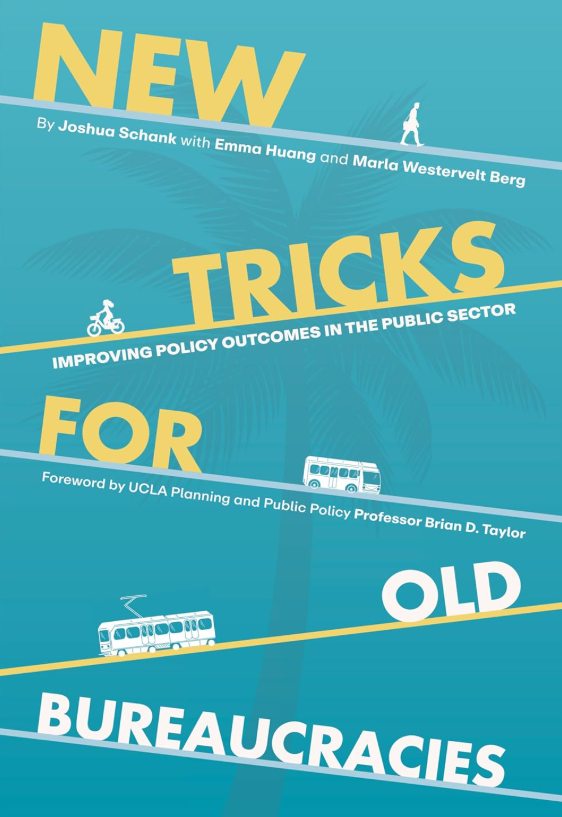
Perfectly aligned with this newsletter’s theme, we are proud to announce that Cityfi Principal Marla Westervelt is the co-author of a new book that is available for pre-order now and will be released on March 27. Co-written with Joshua Shank and Emma Huang, New Tricks for Old Bureaucracies: Improving Policy Outcomes in the Public Sector explores why public agencies so often struggle to adopt new ideas - and what it takes to change that.
Drawing on the authors’ direct experience inside Los Angeles Metro’s Office of Extraordinary Innovation, the book examines the structural, political, and cultural forces that make governments slow to adopt new ideas. It offers a pragmatic playbook for public servants, policymakers, and civic entrepreneurs who want to deliver lasting reform. Through candid storytelling and actionable strategies, the authors show how to navigate internal resistance, build coalitions, and design reforms that achieve meaningful change within complex systems.
Pre-order your copy now and be sure to reach out to Marla to congratulate her on this incredible labor of love.
Where in the World is Cityfi?
Check out where Cityfi will be in the upcoming weeks. We may be speaking at conferences, leading workshops, hosting events, and/or actively engaging in collaborative learning within the community. We would love to see you.
CoMotion MIAMI'26 - Miami, FL - April 28 - 29
Cityfi is proud to be a partner at CoMotion MIAMI'26. Miami is rewriting the rules of American innovation — once celebrated as a sun-drenched playground, it is rapidly transforming into one of the world's most dynamic technology and entrepreneurship ecosystems. CoMotion MIAMI will bring together the world’s leading decision-makers, mayors, founders and investors to chart what’s next in the magic city.
Cityfi Partner Karina Ricks will be speaking at the event, so stay tuned for more details!
Register now and save 30%
What We’re Reading
Articles handpicked by the Cityfi team we have found interesting:
Urban Behavior: Three Theories About Why U.S. Car Crash Deaths Are Plummeting
Transportation Planning: State Transportation Funding Could Get Even Tougher as Oil Prices Rise
Civic Innovation: How to Rewire City Hall
All Things Cityfi
Your guide to our services, portfolio of client engagements, team, and … well, all things Cityfi.