
What’s New? Well … A Lot, Actually!
1,375 words in this newsletter - about 5 minutes and 30 seconds to read.
Special Message from Partners Story Bellows and Karina Ricks
It’s been a week since we announced that Cityfi joined CannonDesign’s consulting practice, and we’ve received a few questions about why.
The short answer: like many of the early-stage companies we advise, we were ready to scale.
We have a strong product — the brilliant, creative people who make up Cityfi and the forward-thinking insight they bring — and we wanted to make a bigger impact than an 11-person team could achieve on its own. Then Blue Cottage, part of CannonDesign, approached us.
What we saw was an organization working in many of the sectors that shape daily life, health, and vitality in the communities we care about: healthcare, education, research, and employment. They were delivering not only beautiful buildings and spaces, but also strategic guidance in smart technologies, operational excellence, sustainability, change management, data insights, and more, all grounded in human experience and better outcomes for people, society, and the environment.
That aligned deeply with the values that guide our work. At the same time, we saw areas where Cityfi could add to their work. One was mobility — the essential dimension of access and movement that enables social mobility and shapes climate and safety outcomes. Another was civic innovation— a deep understanding of how government and civic institutions are evolving based on new technology, climate patterns, and demographic shifts and how to work effectively with them.
Together, this was a true force multiplier. We could strengthen CannonDesign’s already substantial work while significantly expanding our own through the scale, capacity, and innovation expertise they bring. Together, we could do more, offer more, and respond to urgent challenges with greater speed and impact.
AND, we could remain Cityfi — not only in name, but in our work, values, and team. We would continue choosing and serving our own clients and partners. We would continue advancing equity and progress. And we would continue providing the same strategic leadership in mobility and civic innovation, now with even greater strength behind it. For us, it was an obvious and exciting decision.
We’re deeply grateful for the foundation laid by Cityfi founders Gabe Klein, Ashley Hand, and John Tolva. They set the vision and started the journey that made this next chapter possible: a bigger, bolder, scaled-up Cityfi powered by CannonDesign.
Onward!
Building Cities that Residents Deserve: A Moment for DC Transportation
By Camron Bridgford, AICP
In cities, transportation is a key place where policy becomes personal; it is where (no pun intended) the rubber hits the road.
Whether it is the bus that is behind schedule or arrives right on time; the crosswalk that is built for children and the elderly, or the one that feels unsafe; the delivery with either a designated place to unload or one that blocks a bike lane; or the commute that dictates how much – or little – time you have left with your family at the end of the day, these everyday experiences, whether good or bad, are not abstract. Rather, they are the clearest indicators a resident has of whether their government’s transportation infrastructure, policies, and plans are working.
Over the last three months, alongside Adapt/Impact and Fehr & Peers, I have been facilitating the DC Sustainable Transportation Coalition (DCST) – made up of business improvement districts, advocacy groups, and government entities that work to create more efficient and sustainable transportation in the District – to craft the key elements of a 2026 Transportation Agenda. The agenda’s publication, notably, will align with the election of DC’s first new mayor since 2015. While DCST will endorse no candidates, the hope is that come November, a new mayor will look to the Transportation Agenda as an innovative and thoughtful roadmap that provides strategic recommendations for how transportation in the District can be improved.
While on its face the Agenda will articulate transportation-specific strategies, DCST and its coalition members want the message to be loud and clear that transportation is not just about the movement of people and goods. Transportation is the foundation for economic growth and a healthy population, and is a key lever in making DC a more affordable and safer city. Through this work, my Adapt/Impact and Fehr & Peers colleagues and I have had the opportunity to help coalition members identify the key areas of opportunity and challenge for transportation in the District, so as to shape a shared vision, grounded in what residents experience every day, for how the city could and should better function.
As part of this work, DCST will be co-hosting with AIA a Mayoral Forum on May 21 moderated by Bloomberg CityLab. This forum will be a pivotal opportunity to directly engage the potential future leadership of the City with the proposed vision for the Transportation Agenda, including hearing from candidates about how they may enact changes that respond to the transportation expectations and needs of a changing city.
Post-Mayoral Forum, we will continue to work on crafting the final version of the Agenda to ensure it is both ambitious and grounded. A key approach to ensure that the plan isn’t created to simply sit on a shelf is to fundamentally reframe transportation not as a narrow technical field, but as a foundation for affordability, safety, economic growth, and public trust. That means directly translating the Coalition’s values into priorities and implementable tactics that can quickly lead to future decisions and action by DC government, advocacy organizations, and business groups.
Working with DCST, I have regularly thought about how there is a natural tendency to look to and think first about national policies when envisioning large-scale change. While DC residents (admittedly) experience federal policy more than residents of other cities due to DC’s unique federal district structure, at the end of the day, DC residents are still just experiencing their city, and much of their daily lives are shaped by their transportation and mobility opportunities and experiences. Ultimately, cities have a different level of accountability to their residents, and as a result, need to uncover the political will to move on a quicker timeline to enact transportation changes that residents, visitors, and business want to see.
DCST and its 2026 Transportation Agenda hopes that this moment in DC provides exactly the invitation to do that.
Arrowhead Recap
By Monique Ho
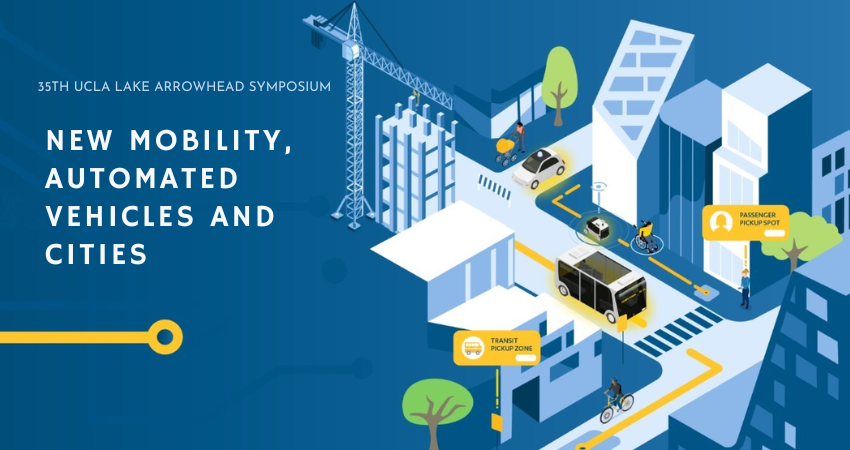
My first experience at the UCLA Arrowhead Symposium was a full-circle moment. As a graduate student at UCLA, I studied the potential impacts of autonomous vehicles (AVs) on land use, interviewing planners and elected officials to understand how they were preparing for what was then a distant, emerging technology. At the time, the prevailing consensus was that we had at least another decade to get ready. Today, that timeline has collapsed. The technology is here, and the conversation has shifted from when AVs will arrive to what we do next, what futures are possible, and how we put the right policies in place to achieve them.
This year’s focus on New Mobility reframed safety through a distinctly human lens. The dialogue extended beyond sensor reliability to explore what mobility looks and feels like for caregivers and women travelers, whose complex trip-chaining patterns have long been underserved and overlooked in traditional planning. If AVs are to succeed, they need to be more than efficient systems. They must be designed around the real, non-linear ways people move through their daily lives.
The symposium also highlighted growing momentum around digital infrastructure, with strong interest in using digital twins and simulation tools to test real-world scenarios before deploying new technologies at scale. Another standout session brought together bicycle and pedestrian advocates who emphasized the opportunity to use this autonomous moment to reimagine land use and reallocate roadway space to expand biking and walking infrastructure while unlocking new housing potential across the region.
Navigating the mixed-autonomy era, where human drivers and driverless fleets coexist with each other and with other roadway users, requires a trifecta of bold vision, durable policy, and cross-sector partnerships. At Cityfi, we’re energized by helping cities, mobility providers, and partners shape emerging technologies through policy to deliver shared, community-centered outcomes. Let’s connect and keep the conversation going!
Where in the World is Cityfi?
Check out where Cityfi will be in the upcoming weeks. We may be speaking at conferences, leading workshops, hosting events, and/or actively engaging in collaborative learning within the community. We would love to see you.
Micromobility Europe Berlin – Berlin, DE – June 2nd – 3rd
Senior Principal and Managing Director of Cityfi Europe Evan Costagliola will be travelling to Berlin in June to Micromobility Europe where he will be delivering a keynote address and moderating a panel titled Welcome to the Family: New Ways of Bringing Micromobility into Public Transport, which will be a discussion with a fresh look into how public transport authorities, operators, and cities integrate shared and personal micromobility - from first-/last-mile and mobility hubs to MaaS and elevated micromobility parking. Reach out to Evan for more information!
ITS America Conference & Expo – Detroit, MI - June 9th – 12th
Partner Karina Ricks and Principal Marla Westervelt will be in Detroit at the ITS America Conference & Expo in June. Karina will be participating in two panels: Rightsizing the Road: Integrating Local Use Vehicles into the Multi-Modal Ecosystem and SEA Change: Realizing the Shared, Electric, Autonomous Mobility Future. If you are a transportation nerd, this conference is for you! It brings together decision-makers and their supporting teams from public and private sector transportation agencies to learn about the implementation of new technologies and solutions that will enable a safer, smart, and more connected transportation system. Let Karina and Marla know you will be there!
What We’re Reading
Curated by Ryan Parzick
Before diving into the articles, you can read the full press release of our team joining the CannonDesign consulting practice here.
OK, here are the articles handpicked by the Cityfi team we have found interesting:
City Planning: How a Suburban County Beat Back Sprawl
Civic Innovation: How Pittsburgh’s Hill District Failure-Proofed Its Community Benefits Fund
Mobility: E-Bikes And Scooters Are Getting Even Safer In Europe: Data
All Things Cityfi
Your guide to our services, portfolio of client engagements, team, and … well, all things Cityfi.